Exercise on your back during pregnancy. Why is the advice so confusing?
Exercise on your back during pregnancy. Why is the advice so confusing?
One of the questions we are asked regularly is:
"Can I exercise lying on my back during pregnancy?"
The short answer is that the research isn't entirely clear, which is why you may hear different advice from different health professionals.
At Surf Coast Physio & Pilates, we take a conservative approach that aligns with current Australian obstetric guidance while recognising that research in this area is still evolving.
Why is lying on your back a consideration?
As pregnancy progresses, the growing uterus can place pressure on two major blood vessels, the inferior vena cava and, in some women, the aorta. This is known as aortocaval compression.
For some women, this can reduce the amount of blood returning to the heart, lower cardiac output and reduce blood flow to the uterus and placenta.
Some women notice symptoms such as:
dizziness
nausea
feeling faint
sweating
unusual breathlessness
Others experience no symptoms at all.
This response varies considerably between individuals and tends to become more likely later in pregnancy.
What does the research tell us?
This is where things become a little more complicated.
Several small studies have investigated women exercising in a supine (lying on the back) position. Many of these studies have found reassuring results, with no immediate evidence of harm to healthy pregnancies during short bouts of exercise.
However, the overall quality of the research is low. Most studies include relatively small numbers of participants, assess only immediate physiological responses and do not follow pregnancy outcomes such as fetal growth, preterm birth or stillbirth.
One of the most comprehensive reviews available is a 2019 systematic review by Mottola and colleagues, which specifically examined exercise performed in the supine position during pregnancy.
The review concluded that there was insufficient evidence to determine whether supine exercise is safe or whether it should be avoided.
Importantly, the review also identified some physiological findings that warrant caution.
Across the studies included:
approximately 31% of fetuses demonstrated temporary fetal heart rate changes during acute bouts of supine exercise
one study found around a 13% reduction in uterine blood flow during supine exercise compared with resting in a left side lying position
These findings do not demonstrate that brief supine exercise causes harm. Equally, they do not demonstrate that it is completely safe.
The challenge is that we simply do not yet have large, high-quality studies that tell us whether these temporary physiological changes have any meaningful effect on pregnancy outcomes.
What about the research on sleeping on your back?
Many people have also heard that sleeping flat on your back late in pregnancy may increase the risk of stillbirth.
Large observational studies have shown an association between going to sleep in the supine position after around 28 weeks and an increased risk of late stillbirth. It has been suggested that reducing supine sleep could potentially reduce the overall rate of late stillbirth.
However, sleeping and exercising are very different situations.
Sleep involves remaining in the same position for several hours, whereas exercise usually involves regular movement and much shorter periods in any one position.
At this stage, we cannot assume that the findings from sleep studies apply directly to brief periods of exercise. Equally, we cannot use the limited exercise research to conclude that all supine exercise is harmless.
Why do current guidelines still recommend caution?
Despite some reassuring newer studies, most international pregnancy exercise guidelines continue to recommend caution with prolonged supine exercise after the first trimester.
Current guidance from the Royal Australian and New Zealand College of Obstetricians and Gynaecologists (RANZCOG) advises avoiding exercises performed flat on the back after the first trimester and recommends avoiding prolonged periods in the supine position as pregnancy progresses. Including their latest 2024 patient info sheet on the subject.
These recommendations are largely based on physiological understanding and expert consensus rather than high-quality clinical trials. In other words, they reflect the uncertainty that still exists in the research.
Our approach at Surf Coast Physio & Pilates
Until stronger evidence becomes available, we choose to take a conservative approach.
Fortunately, there are many excellent ways to maintain strength, fitness and pelvic floor function during pregnancy without routinely exercising flat on your back.
In our classes and individual sessions we generally use:
standing
sitting
side lying
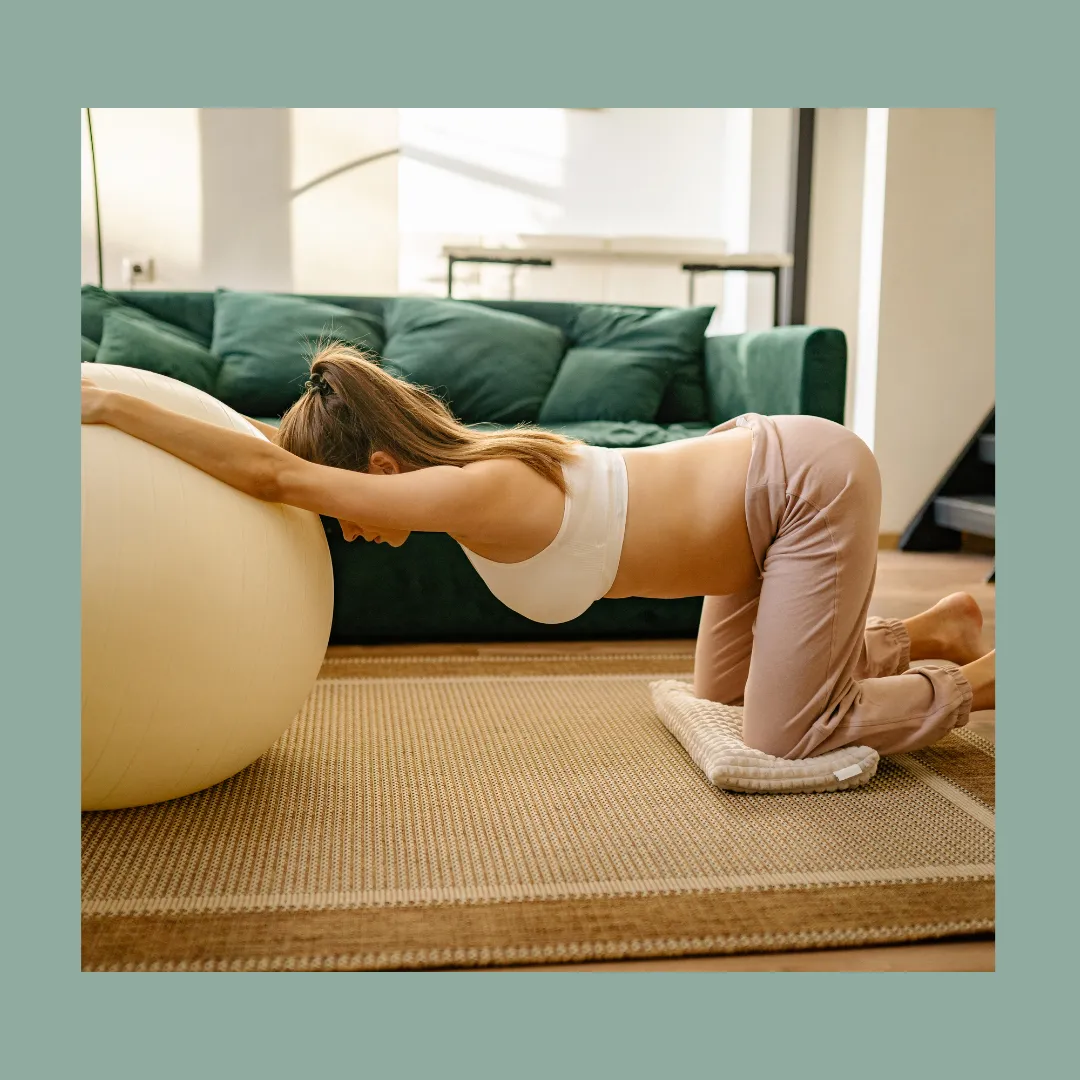
four-point kneeling
inclined positions
These positions allow us to achieve the same training goals while remaining consistent with current Australian guidelines.
There are times when we may use brief periods of lying on your back, for example during an assessment, stretching, myofascial release or when transitioning between exercises. These periods are kept short and we always consider your stage of pregnancy, comfort, symptoms and any pregnancy-specific risk factors.
If you feel dizzy, nauseated, faint or generally unwell in any position, we simply change your position.
The bottom line
The current evidence does not show that short periods of supine exercise cause harm in healthy pregnancies.
However, it also does not provide enough high-quality evidence to confidently say that routine supine exercise is safe for everyone.
For that reason, and because current Australian obstetric guidelines continue to recommend avoiding routine supine exercise after the first trimester, we choose to err on the side of caution.
Fortunately, modifying exercises rarely limits what we can achieve. There are countless effective alternatives that allow women to stay strong, active and confident throughout pregnancy.
References
American College of Obstetricians and Gynecologists (2020). Physical Activity and Exercise During Pregnancy and the Postpartum Period. Committee Opinion No. 804.
Mottola MF, Davenport MH, Ruchat SM, et al. (2019). No. 367: 2019 Canadian Guideline for Physical Activity throughout Pregnancy.
Mottola MF, Nagpal TS, et al. (2019). Safety of acute maternal exercise in the supine position during pregnancy. A systematic review.
Royal Australian and New Zealand College of Obstetricians and Gynaecologists (2020). Exercise During Pregnancy (C-Obs 62).
2019 Canadian guideline for physical activity throughout pregnancy https://bjsm.bmj.com/content/52/21/1339