Is Walking and Pilates Enough for Osteoporosis? This Is What the Research Says.... Surf Coast Physio
Is Walking and Pilates Enough for Osteoporosis? This Is What the Research Says
You walk most days. You might do Pilates once or twice a week. Then a bone density scan comes back showing osteopenia or osteoporosis, and you are left wondering what more you could be doing.
We hear this question often from women in our clinic and classes, particularly after menopause. Walking and Pilates are both excellent for your health. On their own, though, the research suggests they are unlikely to give your bones the specific type of loading they need to maintain or build density.
The good news: bones respond to the right exercise at any age. Here is what the research shows about exercise for osteoporosis, and how physio-led strength training can help you load your bones safely and with confidence.
Why bone density changes after menopause
Bone is living tissue. Your body is constantly breaking down old bone and building new bone, and oestrogen helps keep that process in balance. As oestrogen falls around menopause, bone is broken down faster than it is rebuilt, so density can drop.
In Australia, around half of all women over 60 have osteoporosis [1]. Lower bone density raises the risk of fractures from everyday falls or minor bumps, most commonly at the hip, spine and wrist.
Bones also adapt to the forces placed on them. Exercise works for bone when it loads the skeleton more than everyday activity already does. That is the key to understanding why some types of exercise help bone density more than others.
Does walking increase bone density?
Walking is weight-bearing, so it seems logical that it would strengthen bones. Research reviews have found its effect is small at best:
A review of walking programs in postmenopausal women found no significant effect on bone density at the spine, with possible small benefits at the hip [2].
Australian guidance for GPs notes that low-impact activities such as walking are beneficial for general health but do not improve bone density [3].
The reason is load. Your bones are already used to the forces of walking, so a daily walk does not ask them to adapt.
Keep walking. It supports your heart, mood, balance, joints and general fitness. For your bones, it works best as one part of a broader plan.
Is Pilates good for osteoporosis?
Pilates has a lot to offer women with low bone density. The research on bone density itself is limited:
A 2022 review of randomised trials found Pilates had no significant effect on bone density at the spine or hip in postmenopausal women, although only a few small trials were available [4].
A review used for Canada's osteoporosis guidelines found Pilates may improve physical function and quality of life, while its effect on bone density and falls was uncertain [5].
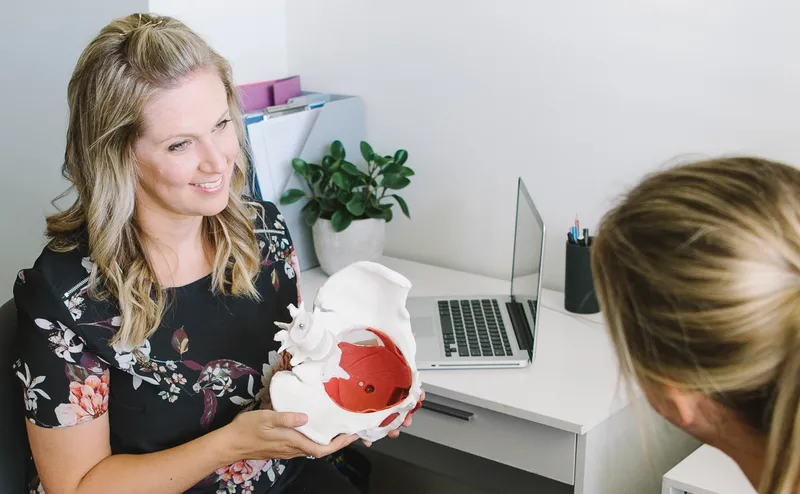
Those functional benefits matter. Pilates builds posture, trunk and back strength, balance, body awareness and confidence in movement, all of which help reduce your risk of falls. It is also a great place to work on your pelvic floor.
In our 1:4 clinical Pilates classes, every client follows an individual program, so exercises can be progressed over time. For bone density specifically, though, most women will also need progressive, heavier loading.
We do however love to get out the jump board in our classes and get some bone impact that way- our clients love this fun addition to programs!
What exercise is best for osteoporosis?
Australian exercise guidelines for osteoporosis, developed by Exercise and Sports Science Australia and used by Healthy Bones Australia, recommend combining three types of exercise [6]:
Progressive resistance training. Lifting weights that are genuinely challenging, in short sets, and gradually increasing the load over time. GP guidance suggests at least two 30 to 45 minute sessions a week [3].
Impact loading. Brief, controlled impacts such as heel drops, small jumps or skipping, built up gradually. These may be introduced after several weeks of strength training, once you have the strength to support them [3]. Again our jump boards can be a great way to start some of this impact work in an easy environment.
Balance training. Challenging balance and mobility work, ideally several times a week, to lower your risk of falls [3].
One point is often missed. Impact exercise can be a problem for women with bladder leakage or prolapse symptoms, which is why pelvic floor training is important alongside it [3]. This is where seeing a pelvic health physiotherapist makes a real difference- fortunately for our clients, we are uniquely set up to be able to assist with this too!
Is it safe to lift heavier weights with osteoporosis?
Many women worry that lifting heavier weights could cause a fracture, and for years exercise advice stayed cautious for that reason. An Australian trial called LIFTMOR tested this directly [7].
101 postmenopausal women with low bone mass trained twice a week for 8 months, in 30-minute sessions.
One group did supervised, high-intensity resistance and impact training. The other did a low-intensity home program.
The supervised group improved bone density at the spine and hip, as well as height, posture and physical function, compared with the home group.
Only one minor adverse event was reported (a back spasm), and a follow-up analysis found no spinal fractures from the training [8].
Two details matter. The women in LIFTMOR were screened before they started, and every session was closely supervised. Heavier loading is not something to jump into alone; it works best with an assessment first and an expert guiding your progression.
Why physio-led strength training for bone health?
You might feel unsure where to start, worried about hurting your back, or nervous about leaking when you lift or jump. Those concerns are common, and they are exactly why the setting matters.
An assessment before you start. We look at your bone density results, fracture history, posture, strength, balance and any pain, so your starting point is right for you.
Pelvic health built in. All of our physiotherapists hold a Postgraduate Certificate in Pelvic Floor Physiotherapy from the University of Melbourne. If leaking or heaviness is holding you back from lifting or impact, we work on it as part of your program.
Progression you can trust. Loads increase gradually, with technique checked every session, so you can work towards the kind of training the research supports.
A private studio. Sessions run 1:1 in our Rehab Studio, so you can learn without feeling watched.
Rebates may apply. Sessions with a physiotherapist may be claimable on private health insurance. If you have a GP Chronic Condition Management Plan, you may be eligible for up to five Medicare-subsidised allied health sessions a year; your GP can advise [9].
Working with your doctor. Exercise sits alongside any medical management your GP or specialist recommends for your bones, including medication.
What we focus on in sessions
Learning to lift with good technique, including squats, deadlifts and overhead presses
Progressive loading that builds steadily over weeks and months
Impact work introduced gradually, when you are ready
Back extensor and postural strength
Balance and falls prevention
Pelvic floor support during lifting and impact
A home or gym program you can keep doing
We track your progress so you can see your strength improve over time.
Who this is ideal for
Women whose bone density scan has shown osteopenia or osteoporosis
Women through or after menopause who want to protect their bones
Women who walk or do Pilates and want to know what to add
Class clients ready to progress to heavier strength work
Anyone worried about falls or losing strength as they age
Women who avoid lifting or impact because of leaking or heaviness
Take the next step
You do not have to give up the walking or Pilates you enjoy. With the right additions, they can become part of a plan that also looks after your bones.
Book an initial strength training assessment with one of our physiotherapists. If you are already in our classes, talk to your physio about whether strength training would suit you.
This article is for general education only and is not a substitute for personalised medical advice. Speak with your GP or specialist about your bone health and any medication.
References
Better Health Channel (Victorian Government). Osteoporosis and exercise.
Martyn-St James M, Carroll S. Meta-analysis of walking for preservation of bone mineral density in postmenopausal women. Bone, 2008.
RACGP Handbook of Non-Drug Interventions. Exercise for preventing bone loss and reducing fracture risk.
de Oliveira RG et al. Effects of Pilates exercise on bone mineral density in postmenopausal women: a systematic review and meta-analysis. Journal of Geriatric Physical Therapy, 2022.
The effects of Pilates on health-related outcomes in individuals with increased risk of fracture: a systematic review. Applied Physiology, Nutrition, and Metabolism, 2022.
Beck BR et al. ESSA position statement on exercise prescription for the prevention and management of osteoporosis, J Sci Med Sport, 2017; and Healthy Bones Australia, Exercise and bone health.
Watson SL et al. High-intensity resistance and impact training improves bone mineral density and physical function in postmenopausal women with osteopenia and osteoporosis: the LIFTMOR randomized controlled trial. Journal of Bone and Mineral Research, 2018.
Watson SL et al. High-intensity exercise did not cause vertebral fractures and improves thoracic kyphosis in postmenopausal women with low to very low bone mass: the LIFTMOR trial. Osteoporosis International, 2019.
Australian Physiotherapy Association. Changes to Medicare chronic disease management.