Returning to Exercise After a Break? What Women Over 40 Should Know | Help available at Surf Coast Physio
Returning to Exercise After a Break? What Women Over 40 Should Know | Help available at Surf Coast Physio
Life gets busy. Children, work, caring for parents, an injury, an illness, or simply a few years where exercise slipped down the list. Now you are ready to get moving again, and you might be wondering where to start.
You are in good company. Only around one in four Australian adults meets the national guidelines for both physical activity and muscle strengthening [1]. Getting back into exercise is one of the best things you can do for your health at any age.
The key is how you restart. Your body after 40, and after a break, may respond differently from how it did last time you were training regularly. Here is what to know, the common setbacks to avoid, and how to build back up safely and with confidence.
What changes after 40, and after a break
Muscle and bone. Strength and muscle mass tend to decline with age, and bone loss speeds up around menopause. Time off adds to this, so your starting point may be lower than you expect. (You can read more in our article on bone density and menopause.)
Tendons. Tendons connect muscle to bone, and they adapt to load more slowly than muscles do. They respond well to steady, gradual increases and poorly to sudden jumps. Hip tendon pain, known as gluteal tendinopathy, is the most common lower limb tendon problem and is particularly common in women around and after menopause, affecting up to around one in four middle-aged women [3].
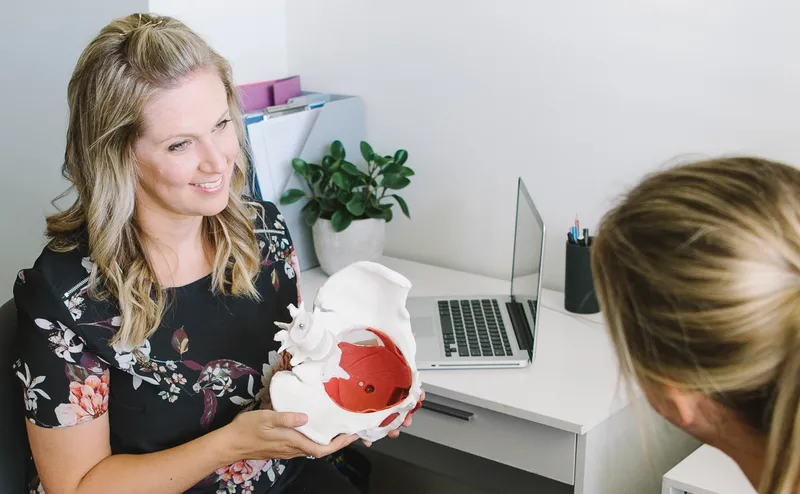
Pelvic floor. On average, around one in three women leak urine when they exercise [4]. Pregnancy, birth, menopause and time away from exercise can all play a part. In an Australian study of more than 4,500 women, almost half had stopped a form of exercise because of pelvic floor symptoms such as leaking or prolapse [5].
Fitness and balance. Cardiovascular fitness and balance both drop with time off, and both come back with regular practice.
Knowing this helps you restart with a plan, so you can keep going.
Common setbacks, and how to avoid them
Picking up where you left off. It is tempting to go straight back to the run, class or weights you used to do. Research on training load shows rapid increases in training, especially from a low base, are linked to a higher risk of injury [6]. That research comes mainly from sport, but the principle applies to all of us: build up gradually.
Doing too much in the first week. Enthusiasm is great. Three hard sessions in your first week, followed by two weeks off sore, is a common pattern. A slightly easier start that you can repeat week after week will get you further.
Skipping strength work. Walking and cardio are excellent, and strength training is what protects your muscles, bones, joints and tendons. Australian guidelines recommend muscle strengthening on at least two days a week [2].
Working around leaking or heaviness. Many women quietly drop the activities that cause symptoms [5]. Leaking, heaviness or dragging during exercise are common, and they are also very treatable. A pelvic health physio can help you return to the exercise you want to do.
Pushing through pain that keeps building. Some muscle soreness in the day or two after a new session is normal. Pain that is sharp, builds session to session, or lingers is a sign to adjust your load and get it checked.
How much should you aim for?
Australia's physical activity guidelines for adults aged 18 to 64 recommend [2]:
150 to 300 minutes of moderate activity a week, such as brisk walking, or 75 to 150 minutes of vigorous activity, or a mix of both
Muscle strengthening on at least two days a week
Sitting less, and breaking up long periods of sitting
The guidelines also say that any activity is better than none. If you are not active now, start with some and build up gradually [2].
Building back up: a few principles
Start below what you think you can do. Finish your first sessions feeling you had more in the tank.
Change one thing at a time. Increase how often, how long or how hard, but not all three at once.
Be consistent before you push. Two or three steady weeks give your body a base to build on.
Include strength from the start. Even simple bodyweight exercises count, and they protect you as you add more.
Mix it up. Combine strength, cardio, balance and mobility rather than doing only one type of exercise.
Listen to your body. Notice how you feel the next day, not just during the session, and adjust from there.
When to check in first
The Australian pre-exercise screening system, used by exercise and health professionals, recommends seeing your GP or an appropriate health professional before starting if you [7]:
Have a heart condition or have had a stroke
Get unexplained chest pain or discomfort, at rest or during activity
Feel faint, dizzy or lose your balance during activity
Have had an asthma attack needing urgent medical care in the last year
Have diabetes and have had trouble controlling your blood sugar recently
Have any other condition that may need special consideration
It is also worth seeing a physiotherapist first if you have ongoing joint or tendon pain, a recent injury or surgery, osteoporosis, or pelvic floor symptoms such as leaking or heaviness.
How physio-led return to exercise works
An assessment first. We look at your goals, exercise history, strength, balance, any pain or past injuries, and your pelvic floor, so your starting point is right for you.
Pelvic health built in. All of our physiotherapists hold a Postgraduate Certificate in Pelvic Floor Physiotherapy from the University of Melbourne. If leaking or heaviness has been holding you back, we address it as part of your plan.
A program that progresses. We build your load gradually and adjust it as you go, so you get stronger without the stop-start cycle of setbacks.
Options that suit you.
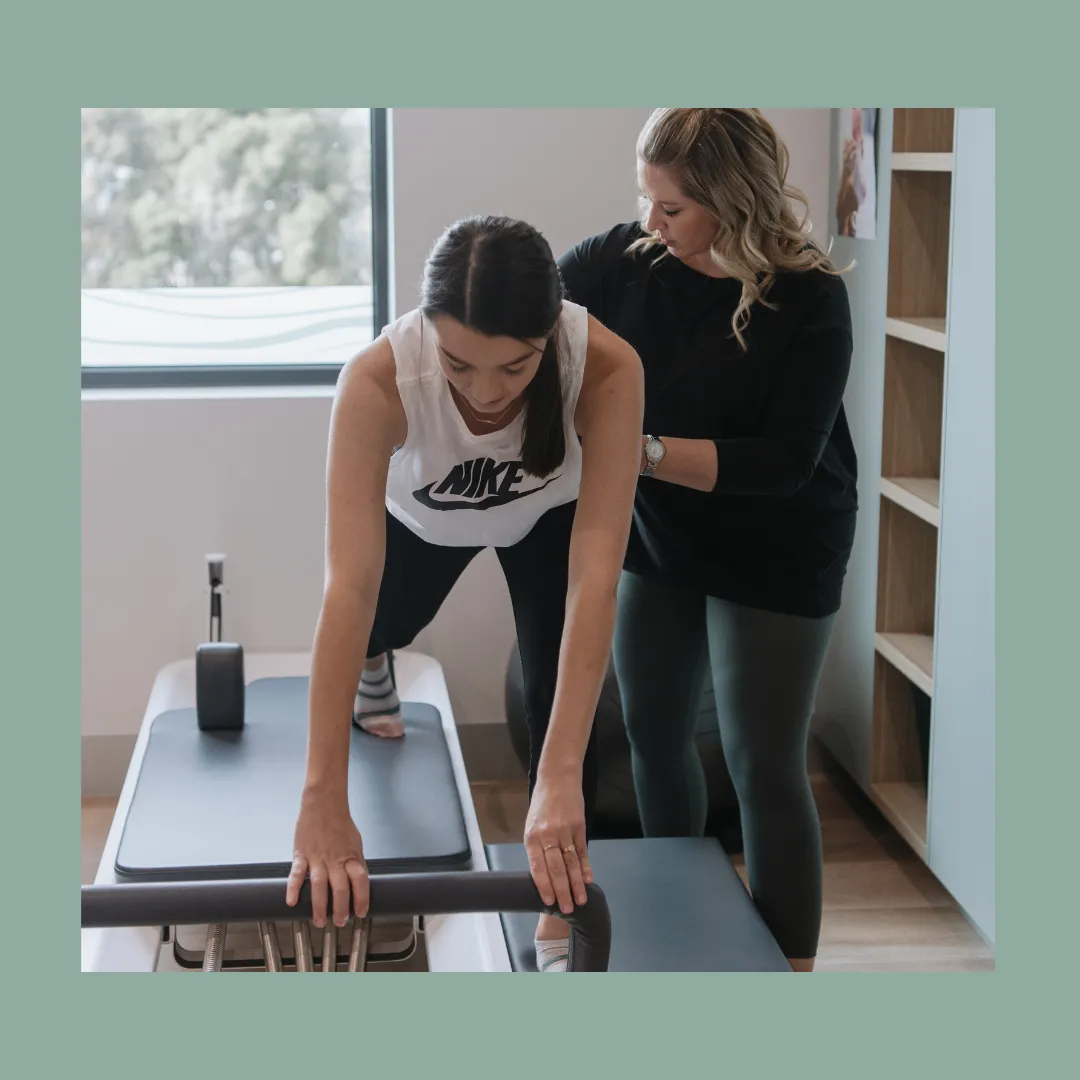
1:4 clinical Pilates classes in our Movement Studio, where every client follows an individual program in a small group
1:1 strength training in our private Rehab Studio, for progressive strength work with a physio
Individual physiotherapy for pain, injury or pelvic floor symptoms that need treatment first
Measurable progress. We can use a dynamometer, a handheld device that measures muscle force, to track how your strength changes over time.
Rebates. Sessions with a physiotherapist may be claimable on private health insurance.
Who this is ideal for
Women over 40 getting back into exercise after months or years off
Women whose last attempt to restart ended in pain or injury
Women who have stopped running, jumping or classes because of leaking or heaviness
Women in perimenopause or after menopause who want to build strength
Women recovering from injury, surgery or illness who want a safe path back
Anyone who would like guidance and accountability to make exercise stick this time
Take the next step
It is never too late to get stronger, fitter and more confident in your body. With the right starting point and a gradual plan, you can build back up and keep going.
Book an initial assessment with one of our physiotherapists, and we will help you choose the right path, whether that is classes, strength training or treatment first.
This article is for general education only and is not a substitute for personalised medical advice. If you have a medical condition or symptoms during exercise, speak with your GP before starting.
References
Better Health Channel (Victorian Government). Sports and physical activity.
Australian Government Department of Health. Australia's Physical Activity and Sedentary Behaviour Guidelines for Adults (18 to 64 years).
Current and future advances in practice: tendinopathies of the hip. 2024.
Australian Physiotherapy Association. Pelvic floor symptoms a barrier to sport and exercise.
Dakic JG et al. Pelvic floor disorders stop women exercising: a survey of 4556 symptomatic women. 2022.
Gabbett TJ. Debunking the myths about training load, injury and performance: empirical evidence, hot topics and recommendations for practitioners. British Journal of Sports Medicine, 2020.
Exercise and Sports Science Australia, Sports Medicine Australia and AUSactive. Adult Pre-Exercise Screening System (APSS) V2, 2019.