Prolapse and Exercise: Can a Pessary Help You Keep Running and Lifting?
Prolapse and Exercise: Can a Pessary Help You Keep Running and Lifting?
You’ve gone back to running after having a baby, or you’ve started lifting weights to look after your bones through menopause. Then you notice it: a heaviness or dragging feeling in the vagina, or a sense that something is “falling down”. It might be worse at the end of a run, after a heavy session at the gym, or at the end of a long day.
For many women, the next thought is: Do I need to stop?
Usually, the answer is no. Here’s what you need to know.
What’s happening?
Pelvic organ prolapse means the support for the bladder, uterus or bowel has stretched or weakened, so one or more of these organs moves down into the vagina. It’s common, particularly after vaginal birth and around menopause, when falling oestrogen levels change the pelvic tissues.
Symptoms can include:
heaviness, dragging or pressure in the vagina
a bulge you can see or feel
difficulty emptying your bladder or bowel
symptoms that get worse with impact, lifting or long periods on your feet
Symptoms often change from day to day. They can vary with your cycle, how tired you are, breastfeeding, and how much you’ve done that day.
Should I stop exercising?
Exercise is important for your heart, bones, muscles, mood and long-term health, and that doesn’t change when you have a prolapse. Stopping completely is rarely the answer, and it can leave you weaker and less confident.
What often helps is getting the right advice about how you exercise. A pelvic health physiotherapist can assess your pelvic floor and prolapse, then help you work out:
which activities you can keep doing, and which might need adjusting for now
how to build your pelvic floor strength and coordination
how to manage breathing and pressure when you lift
how to build up your load and impact gradually
whether a pessary might give you extra support
Getting a medical check first matters. If you notice a new bulge or heaviness, see your GP or gynaecologist for a pelvic examination to rule out other causes.
What is a pessary?
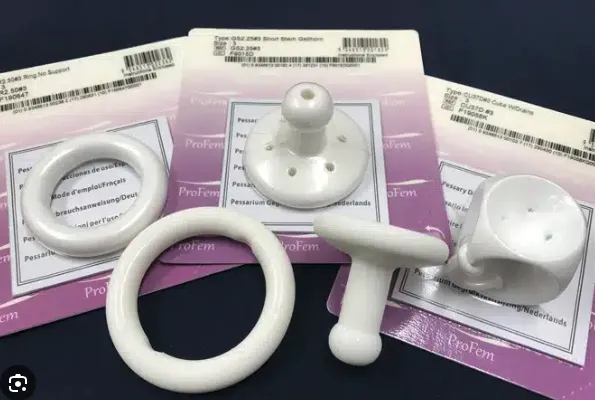
A pessary is a removable device, usually made of medical-grade silicone, that sits inside the vagina and supports the pelvic organs. You might think of it as a little like a sports bra for the pelvic floor: support from inside while you move.
When a pessary fits well, most women can’t feel it, and their heaviness or bulge symptoms reduce noticeably. For many active women, that makes the difference between avoiding exercise and getting back to running, lifting, netball or surfing with confidence.
Pessaries after having a baby
We often use pessaries with postpartum women who want to return to running, lifting or higher-impact exercise while their body is still recovering.
In this situation, a pessary is often a temporary support. It lets you stay active while your pelvic floor gets stronger and your tissues recover. Over time, as your symptoms and strength improve, your physio can guide you through reducing and stopping using it.
If you’re breastfeeding, lower oestrogen levels can make vaginal tissues more delicate. That doesn’t rule out a pessary, but your physio may want to check on how your tissues are coping sooner.
Pessaries around and after menopause
After menopause, lower oestrogen affects the quality of vaginal tissue and how well it tolerates a pessary. That means there are extra things to consider.
Often a pessary can still work well, particularly if you’re able to insert and remove it yourself. In other situations, we work closely with local gynaecologists to make sure your pessary and your tissue health are monitored properly.
Realistic expectations
A pessary can make a big difference, but it’s worth knowing what to expect:
Fitting can take time. Sometimes we find a good fit quickly. Other times it takes a few sizes or types.
A pessary doesn’t suit everyone. Depending on the shape of the vagina, the type of prolapse and how much the tissues move, it isn’t always possible to find one that gives enough support.
It works best as part of a plan. A pessary supports you while you exercise, but pelvic floor training, smart loading and ongoing strength work are still important.
When to see a pelvic health physio
Book an appointment if you notice:
heaviness, dragging or a bulge, especially during or after exercise
leakage when running, jumping or lifting
that you’re avoiding exercise because of pelvic floor symptoms
that you’re unsure how to return to exercise after having a baby
You don’t need to wait until symptoms are severe. The earlier you get advice, the sooner you can get back to moving with confidence.
How we can help
At Surf Coast Physiotherapy & Pilates, all our pelvic health physiotherapists hold a Postgraduate Certificate in Pelvic Floor Physiotherapy from the University of Melbourne, and several have additional training in pessary fitting.
We start with a thorough pelvic floor assessment. From there, we’ll create a plan that might include pelvic floor training, exercise guidance, a pessary fitting, and ongoing support through our clinical Pilates classes or strength training.
Book a pelvic floor assessment